


Lithium vs AGM Battery: Which Suits Your Caravan?
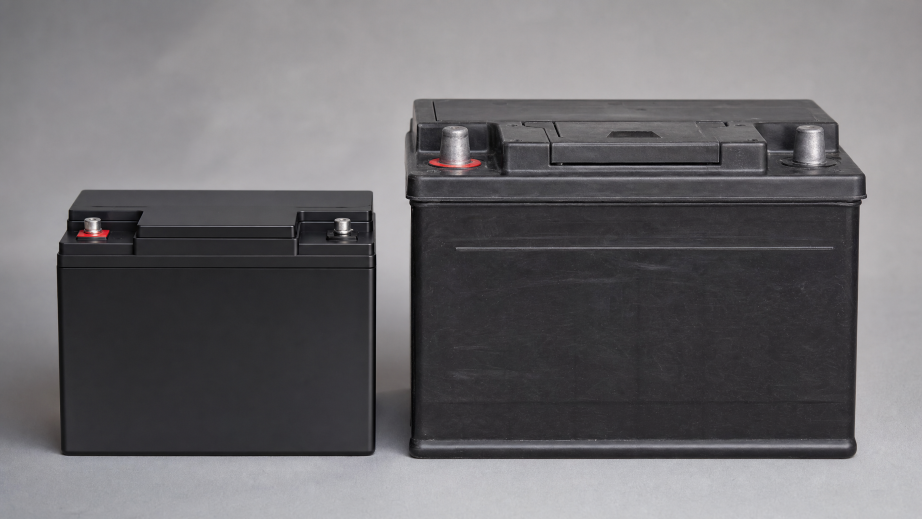
Lithium vs AGM Battery: Which One Actually Suits Your Rig?

Spend ten minutes in a caravan park camp kitchen and someone will eventually bring up the lithium vs AGM battery debate — usually with strong opinions and a few numbers that don’t quite check out. It’s a genuinely useful question, though, because the two chemistries behave differently enough that picking the wrong one means either overspending on capacity you’ll never use, or running out of power two nights into a trip. Here’s what actually separates them, without the sales pitch.
What’s Actually Different Inside a Lithium vs AGM Battery
An AGM (absorbent glass mat) battery is still a lead-acid battery at its core — it just holds the electrolyte in a fibreglass mat instead of a free liquid, which is why it can be mounted in more orientations and doesn’t need topping up. A lithium deep-cycle battery, almost always built around LiFePO4 (lithium iron phosphate) cells, is a completely different chemistry. Each cell sits at a nominal 3.2V, so four cells in series give the 12.8V nominal pack that’s marketed as “12V lithium.”
The chemistry difference is what drives everything else in the lithium vs AGM battery comparison: how much of the rated capacity you can actually use, how many times you can cycle it, how it copes with cold, and how much it weighs for the same amp-hour rating.
Weight and Space: Why It Matters More Than You’d Think

For the same usable capacity, a LiFePO4 battery typically weighs roughly half what an equivalent AGM battery does. On a caravan or camper that’s already fighting a tare weight limit, that difference can be the gap between fitting a second battery and a decent inverter, or maxing out payload before you’ve packed a single esky. It’s less dramatic in a 4WD dual-battery setup where one battery sits under the bonnet or in a drawer system, but touring rigs running solar, an inverter and a fridge off the house battery feel the weight saving immediately.
Cycle Life and Depth of Discharge: The Real Cost Comparison
This is where the lithium vs AGM battery argument usually gets decided, because the headline price tag on a lithium battery only tells half the story. AGM batteries are generally rated for somewhere in the order of 300-500 cycles if you’re discharging to around 50% depth of discharge (DoD) each time — go deeper than that regularly and you shorten the battery’s working life noticeably. Quality LiFePO4 packs, by contrast, are commonly rated for 2,000 to 5,000-plus cycles at 80% DoD or deeper, because the built-in battery management system (BMS) is specifically designed to allow safe deep discharge without the plate degradation that cripples lead-acid batteries under the same conditions.
Run the maths over a few years of regular touring and the picture changes: a lithium battery might cost noticeably more up front, but if it’s still healthy after the second or third AGM replacement, the total cost of ownership tends to favour lithium for anyone camping most weekends rather than twice a year. For occasional users who plug into mains power every night anyway, an AGM battery can still make perfectly good financial sense — this isn’t a case where one chemistry is objectively “better” in every situation.
Usable Amp-Hours Aren’t the Same as Rated Amp-Hours
A 100Ah AGM battery and a 100Ah lithium battery are not equivalent in practice. Because AGM batteries are best kept above roughly 50% state of charge to protect their lifespan, you’re realistically working with around 50Ah of usable capacity. A 100Ah lithium battery, discharged to 20% or even lower without meaningful long-term damage, gives you closer to 80Ah of genuinely usable power. That’s the number that matters when you’re sizing a system against your fridge, lighting and water pump draw overnight.
Charging Behaviour and Cold-Weather Caveats
Lithium batteries charge faster and accept a much higher charge current than AGM, which matters if you’re relying on solar or a short generator run to top up before heading off each morning. But there’s a genuine safety caveat that doesn’t get mentioned often enough: LiFePO4 cells should not be charged below 0°C. As the battery chemistry researchers at Battery University [explain in detail](https://www.batteryuniversity.com/article/bu-410-charging-at-high-and-low-temperatures/), charging below freezing causes lithium plating on the anode — permanent damage that isn’t obvious at the time but shortens the battery’s life and can affect safety. Any decent lithium battery includes a BMS with a low-temperature charge cutoff to prevent this automatically, but it’s worth understanding why that cutoff exists rather than assuming it’s a fault if charging pauses on a frosty high-country morning.
AGM batteries don’t have this restriction and will accept a charge in sub-zero conditions without the same risk, which is one of the few scenarios where AGM still has a genuine technical edge over lithium rather than just a lower purchase price.
So Which Should You Actually Buy?
If you’re a weekender who mostly stays powered by mains or a generator, an AGM battery remains a sensible, lower-cost option. But for anyone doing serious off-grid touring — running a fridge, lighting, a water pump and maybe an inverter for days at a time, especially with solar input — the deeper usable capacity, longer cycle life and lighter weight of lithium tend to win out once you look past the sticker price.
This is exactly the gap Invicta Lithium batteries are built for: LiFePO4 cells, a proper integrated BMS, and amp-hour ratings that reflect what you can genuinely draw down without shortening the battery’s working life. If you’re speccing a new setup or replacing a tired AGM before your next trip, it’s worth working out your actual daily amp-hour draw first — that number, more than any brand name, is what should decide which battery ends up under your caravan’s bed base.